
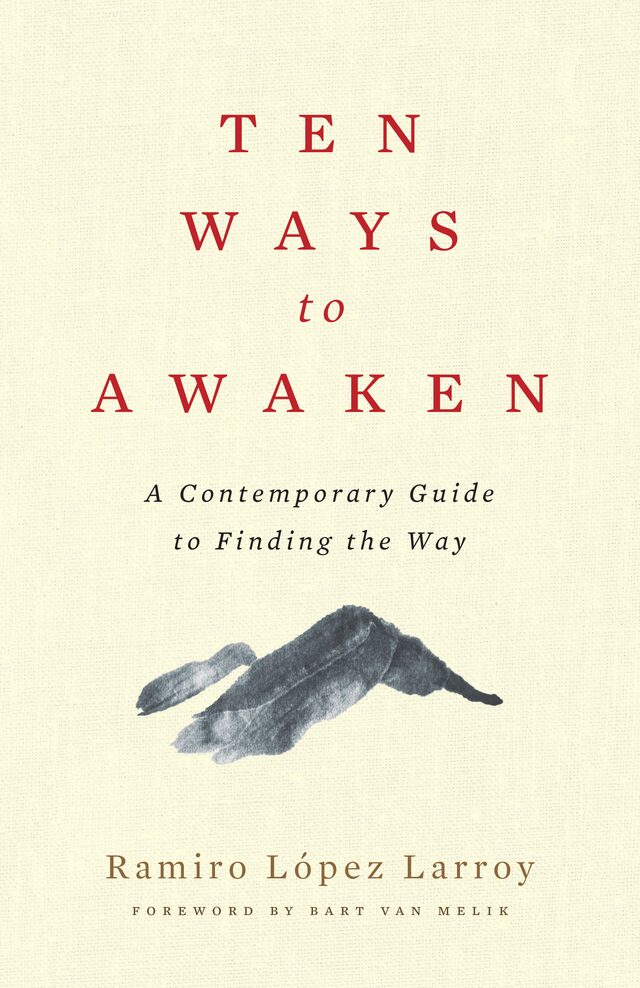
No dogma, no promise of overnight transformation. An invitation to see more clearly, suffer less, and discover how caring for our own minds and hearts opens us to caring for others.
The path begins in the life you already have.
Ten insights, one path
- OneImpermanence can be felt
- TwoNothing arises on its own
- ThreeThoughts are not the truth
- FourWhen emotions intensify
- FiveHappiness depends on me
- SixWe are the fruit of our actions
- SevenTending the garden
- EightLearning from suffering
- NineThe illusion of self
- TenThere is no separation
- With a foreword by Bart van Melik, an epilogue, and recommended readings
From the Introduction
If someone had told me ten years ago that I would end up writing a book on Buddhism, personal growth, and how to live better, I never would have believed them. My whole career had been focused on economics, finance, and business.
But life—often harshly—showed me just how easy it is to live on autopilot, disconnected from ourselves. My divorce, after twenty-one years of marriage, and the pain it brought, forced me to radically question the way I was living my life.
It was in that dark moment that Miguel Ángel Castro, a psychiatrist I was seeing at the time, casually said to me: “Meditating would do you some good.”
This advice marked a turning point in my life. I began to read, to practice; I dared to attend silent retreats, to build relationships with teachers. And through this process I discovered, to my surprise, just how misunderstood and little known this path was, even to those close to me.
There are so many preconceptions around meditation—and I confess I held them all—that many people simply turn away from it without even asking what it is really about. All too often the practice is shrouded in clichés that reduce it, make it seem suspicious, or treat it as something esoteric.
It was hard for me at first, too. Some ideas sounded ridiculous. But few experiences are as powerful as discovering for yourself that the man who sat under a tree more than 2,500 years ago might not have been so wrong.
These teachings don’t come from a superior being or a deity, but from Siddhārtha Gautama—the Buddha—a human being of flesh and blood. What’s extraordinary is that he never demanded blind faith in his words. Instead, he invited each person to test them through their own experience and see for themselves whether they hold up.
This book is an attempt to present an introductory, accessible overview of the Dharma, and to show how these teachings can be lived in the midst of contemporary life—not by retreating to a monastery or withdrawing from the world, but by learning to inhabit it differently. What I offer here are ten insights—ten deep realizations, ten ways of awakening—that I discovered along my path, interwoven with sections describing some elements of Buddhist philosophy that I consider essential.
Keep reading with the free sample on Amazon.
What teachers and readers are saying
“In this beautiful little book, López Larroy shares the teachings of the Buddha in a way that is profound and at the same time simple and accessible. He explains the core teachings in a relatable manner, focusing on the concerns of the ordinary person: dealing with difficult thoughts and emotions, loving ourselves and others, and finding happiness. With stories from his own practice, he normalizes the challenges of the spiritual path while inspiring us to take responsibility for our lives. Each chapter builds upon the previous one, leading to a beautiful conclusion focusing on the interconnectedness of us all and the open heart that cares and wants to be of service. Recommended for both beginners starting a meditation practice and more experienced students who want a refresher.”
“I know Ramiro, and I have had the privilege of sharing many conversations with him about practice and the Dharma. What I appreciate about this book is that it does not present Buddhism as a body of ideas to be mastered, but as something to be encountered in the midst of ordinary life. These pages are an honest account of one person’s ongoing journey of looking, questioning, practicing, and discovering. They invite us to do the same.”
“In Ten Ways to Awaken, Ramiro López Larroy does a beautiful job of providing just what is needed for people who are new to meditation and Buddhist teachings. He writes in an accessible, heartfelt and inspiring way. I highly recommend this book.”
Guiding Teacher, Insight Meditation Community of Colorado
“Ten Ways to Awaken draws on Ramiro López Larroy’s own practice. He shares the path as he has walked it, so what you find here comes from more than ideas. He meets the doubts that stop people from ever beginning, and the quieter ones that stall us once we have, with real honesty. Whatever stage you are at, this is a grounded companion for anyone walking the Buddha’s path.”
Former deputy editor of Buddhadharma
“Reading this book is like having a comfortable conversation with the author… I definitely recommend reading this even if you don't follow Buddhism.”
“A comprehensive introduction to Buddhism that’s written in accessible lay language.”
“I’ve read introductory books on Buddhism, but this is the first time I understood the same particulars in a more concrete way. So many great insights worth reading again. A short, super accessible read. I highly recommend it—I know I will read it again, possibly several more times.”
“An exceptionally honest, accessible, and life-affirming introduction to Buddhist practice. It beautifully strips away esoteric clichés to show how mindfulness can anchor everyday modern life.”
“Ten Ways to Awaken offers easily digestible series of techniques. It’s well written and quite endearing. The author’s personality and humanity enrich the words so that, for me, this became much more than a “how to.” I highly recommend it.”
In other pages
Paperback and ebook
Paperback
- AmazonPaperback · also Kindle
- Your local bookstoreOrder by ISBN 979-8-9961158-0-8
Ebook
- Amazon KindleKindle
- Google Play BooksAndroid · web
- KoboKobo readers · app
- Barnes & NobleNook
¿Preferís leerlo en español? Este libro fue escrito originalmente en español: Diez maneras de despertar.